On Discernment and Misrecognition: The Tortoise Beats the Hare??

cecil turtle

The beloved Cecil Turtle!

I was thinking about spiritual discernment this morning and a wonderful insight shared by some good friends about how sometimes we don’t see or hear things quite accurately, like thinking that a voice is coming from behind us rather than in front.

This picture is from one of my all-time favorite Bugs Bunny cartoons, Tortoise Beats Hare. Bugs’ most insightful director, the incomparable Chuck Jones,  is one of the great spiritual geniuses of our time 🙂 and I find it rather amusing that he reportedly hated this particular episode directed by Tex Avery because he thought it made Bugs unrecognizable. But ain’t that the truth about our own spiritual condition sometimes– it happens that we see something rather different or even unrecognizable about ourselves when we look in the spiritual mirror of prayer (James 1:22-26)? Perhaps we are, as Paul puts it, being made new!

Anyway, watching this classic again  reminds me of how sometimes when we see certain objects in the distance they appear to be moving very slowly but in fact they’re moving much more quickly than we can anticipate. And of course the vice versa is also true. It’s only when we get closer to the point of meeting that we see things are moving very differently than we had imagined. Like Desperados waiting for a train,  we find we may not be able to catch on to the fast moving boxcar like we had thought. Best to regroup and wait for another to come by that is moving our speed. 

Discernment is like this, and it means we must stick with it until the moment things come into focus and we sense the scene has reached a fitting resolution at least for the time being. Because our thoughts are not God’s thoughts, nor our spiritual eyes and ears perfectly keen, we can expect misrecognition to happen. This is rarely anyone’s fault as I often need to remind folks I am working with in spiritual direction. And we do not always know ourselves, never mind others, as well as we thought, and God can be doing something deep in our hearts about which we may at the moment be only dimly aware. 

Discernment means recognizing this reality and not getting misled by the optics or too frustrated by our lack of clarity. And of course it does no good to beat ourselves up for feeling frustrated or confused either! Disappointment is only natural, as long as we remember the great Book of Common Prayer thanksgiving prayer that we take “disappointment and failure not as a measure of our worth, but as a chance for a new start.”

As for me, I’m still not sure whether I am more of a tortoise or more of a hair at this moment in my life. Actually no “hair” at all. 🙂 Thanks Siri for your fruitful  voice misrecognition 🙂

mt baldy

Mt. Baldy–inside of which turtles and rabbits run free

Gurdon Brewster’s Bust of Reinhold Niebuhr and the art that sets us free: “Imposters yet true”

reinholdniebuhr_480x240

We are treated as impostors, and yet are true
(2 Corinthians 6:8).

I will always associate this verse from Paul with Reinhold Niebuhr’s remarkable sermon from his book Beyond Tragedy which I read while at the University of Chicago Divinity School in the mid 1990’s.

Niebuhr really stretched out in his sermon, reading this verse as a way of thinking of the art of storytelling, myth, legend and poetry as privileged means of theological exploration.  i.e. myths are sometimes seen as ‘impostors’ because they aren’t ‘literally’ true, and yet, as Niebuhr passionately argued, our stories as much as our dramatic, poetic leaps of body and spirit are often the closest we can get to articulating the mysterious truth of God’s presence in our lives.

It was, I realized only much later, a rather brilliant rejoinder to Plato’s dismissal of the artists from his ideal polis, Niebuhr suggesting that there was more “truth in myths” (which I think was the title of the chapter in Beyond Tragedy) than there was in the desiccated reasoning of the literalizers.

Speaking of Niebuhr, I can’t wait for the chance to head to NYC, to visit the library of Union Theological Seminary, Niebuhr’s stomping grounds for most of his theological career. There I believe still sits the bust of Niebuhr made by our beloved Gurdon Brewster, who shared with me the story about how Niebuhr growled at him when Gurdon asked to do his bust. “Don’t do it in bronze, I’m not dead yet!” was his response, and then he insisted he was too busy to sit for Gurdon to study and cast him. Classic Niebuhr gesture, who once told Paul Tillich to hurry up on one of their daily theological talk/strolls because Tillich was too busy smelling the flowers. “They’ll still be there tomorrow!” Niebuhr impatiently reprimanded. Score one for Tillich in their ongoing theological debate. Stopping to smell the flowers while on a walk is always good-better-best theological practice!

Gurdon accepted the challenge, by the way, and gathered as many photographs of Niebuhr as he could to do the painstaking work of casting Niebuhr’s bust while the man himself continued to fly about his work with barely a pause to catch his breath. Is the bust an accurate representation of the man? Given that he never stood still, a bust of Niebuhr is in and of itself a bit comical, but I can’t wait to give it a look. Niebuhr was for many years my theological hero and it when Gurdon dropped his name during my first  conversation with him over lunch in 2008, I knew I’d made a friend worth his weight in bronze or gold.

Gurdon Brewster, imposter, yet true…thank you my dear friend!

Dinner Table Fun and Games at Brewster House

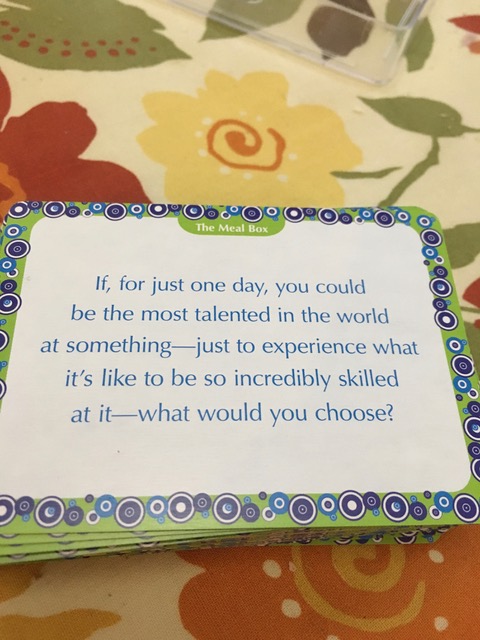
talent card

At Brewster House every night, the West crew has dinner at the dining room table. Often our eldest, Cecilia, will request that we play a little game Sarah brought back from Mount Saviour Monastery in Elmira.

It’s a card game where we read a card from a deck with a conversation prompt. Last night the card pictured here was the one chosen. Cecilia went first and said she would be an artist and would draw as many beautiful paintings as she could in the one day she had artists gift. That way, her gift would last well beyond that one magical day and would give others enjoyment for years to come. Wow! Cecilia sets the bar high.

Her adoring brother Amos listened carefully to his sister’s choice and then quickly re-calibrated. He had been thinking of choosing the talent of basketball but decided that wouldn’t give much lasting joy to others, so he chose instead to have the talent of a great writer and write as many wonderful books as possible on his magic day. Given his recent success with his book The Talking Hot Dog and the Mean Yellow Stick, we all approved.

Sarah went next and shared her desire to be the world’s greatest ballet dancer so that her entire body and soul would be giving glory to God and joy to others. This was indeed good!

Annie went next and picked singing and added that she would record her songs as music videos that could inspire others for years to come after her one day of talent was gone. Our budding you-tuber had chosen well. Amen.

Cecilia then noticed that I had not gone and insisted it was my turn. World’s best farter? (That was Bear’s inappropriate suggestion). No! Best priest ever? asked one of the kids. Nope, already am came some braggadocious bumblehead’s retort. World’s best comedian? Maybe. Best singer songwriter? Oh, that would be cool to write a song like Masters of War or Blowing in the Wind that would inspire for years to come. But finally my answer came: World’s greatest children’s book writer. That would be my choice. The table was pleased. Dessert and dish washing then commenced.

Spirituality, art, and prophetic justice

Though the artist must be willing to enter into the crux of human suffering, anxiety, and the propensity for violence against both self and other, the artistic spark comes from a deeper place.

Here is Juan Diego responding to Our Lady of Guadalupe’s visitation to him even as he struggles with his own deep sense of loss from the ravages of colonialist violence:

“Then he dared to go to where he was being called. His heart was in no way disturbed, and in no way did he experience any fear; on the contrary, he felt very good, very happy…The mesquites, the cacti, and the weeds that were all around appeared like feathers of the quetzal, and the stems looked like turquoise; the branches, the foliage, and even the thorns sparkled like gold. He bowed before her, heard her thought and word, which were exceedingly re-creative, very ennobling, alluring, producing love.”

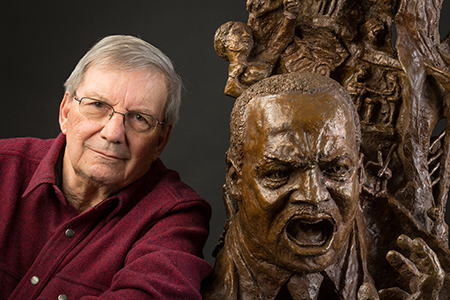
Here I am reminded of one of Gurdon‘s last sculptures, the overpowering Prophetic Thunder. I remember him telling me about how tired he was of images of King that sanitized his prophetic fire.

And I imagine that in order to articulate this fire into bronze, he must have had to discipline himself with exquisite attentiveness: returning again and again to this ‘re-creative, very ennobling, alluring…love,” in order not to go astray into bitterness and resentment as he worked. This spiritual discipline of the artist is deeply analogous to what King had to do day after day as he faced the violence of American racism and economic and political inequality. Art, spirituality, and social justice are intimately related in this tradition Gurdon brought to Cornell and shared for so many years.

In this inspired sculpture, currently on display at the Tompkins County Public Library, we see that in Gurdon’s time with Daddy King and the beloved community, he learned his lessons well.

20160115GH GURDON BREWSTER Sculptor Martin Luther King Jr. Sculpture

20160115GH GURDON BREWSTER Sculptor Martin Luther King Jr. Sculpture

Sermon for Third Easter at Church of the Epiphany Trumansburg, NY

Listening: The Heart of Spiritual Direction

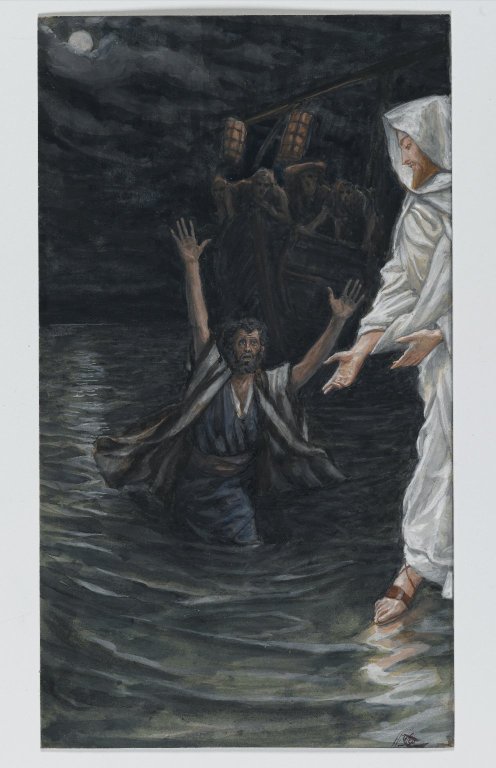
Brooklyn_Museum_-_Saint_Peter_Walks_on_the_Sea_(Saint_Pierre_marche_sur_la_mer)_-_James_Tissot_-_overall

The biblical word that is often translated as obedience is hypakoē in the Greek, a word whose root is from the verb which means to listen attentively.

This is what makes discernment so crucial, because we hear many voices and many words and it is not always easy to know which are God’s. Some of these words are our own, others those we inherit from our culture, still others from our personal stories, wounds, past traumas. And God’s word may speak through these words, but God can also issue forth a new song previously unheard, at the periphery of our spiritual-auditory landscape.. So we sift through all of this slowly-in God’s time, not our own.

A quiet word, as in the whisper to Elijah in the whirlwind of our doubts and fears, may often be the one we must strain to hear and follow.

And when such a word calls us, as it did the people of Israel, into unfamiliar territory, even a wilderness without clear landmarks, obedience means to listen to this call and to follow it in trust.

This is hard work, and it involves suffering as we let go of our attachments to the familiar and secure. We may launch out, as Peter did, in fear and trembling, and at times draw back in fear and need God’s forgiveness for our faltering.

As always, for those of us in the church, Jesus is our guide for this attentive listening:

8 Although he was a Son, he learned obedience through what he suffered; 9 and having been made perfect, he became the source of eternal salvation for all who obey him
(Hebrews 5:8–9).

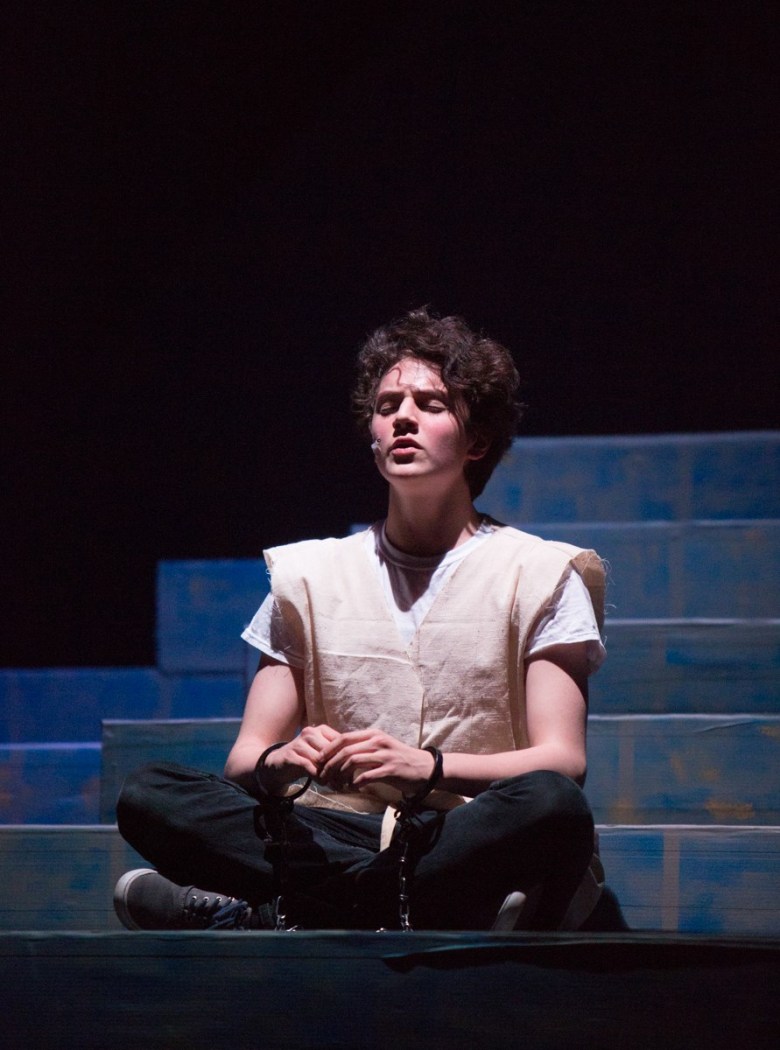
Running to Places production of Joseph and the Amazing Technicolor Dreamcoat

18449281_10155108170370170_3053207280588996151_o

Photo by George Cannon Images

My daughter Annie was in her first production of this remarkable local youth theater group. Here are a few thoughts of mine from a recent Facebook post:


Joseph and the Amazing Technicolor Dreamcoat is truly a wonderful work of pastoral theology–the story of Joseph is read as a story of how our gifts are often also our afflictions–in Joseph’s case his gift of dreams and dream interpretation–leading him to isolation and ostracization at the beginning of the show–but at the pivotal moment when he is thrown in jail and everything seems dark and he feels utterly isolated (Close Every Door), the chorus comes to tell him no, we’ve read the book, Joseph and you come out on top. This is a remarkable affirmation of the importance of faith, and for those of us who are biblical people, a reminder of how important it is to read the scriptures as our story, not just that of ancient history.

They then sing Go Go Go Joseph and tell him that the way forward is to realize that this gift is to be affirmed, understood, and used for the good of others–which he does for the starving people of Egypt and then his brothers.

And in the end, the coat of many colors is taken off his shoulders–he is only special when he shares that gift. It is meant for the good of others, not self-adulation, as the good book says.

In R2P’s remarkable staging, as the coat is taken off Joseph’s shoulders the lighting on stage becomes technicolor; now the community is technicolor–showing that the gift that was the affliction and isolating can, with work and group discernment, become a gift for the whole community in its great diversity of gifts and dreams.

When Jasper as Joseph raised his hands up at the end, the whole community did too and we see the power of love and mutual recognition of our gifts. The joy and redemption and release were palpable and I for one was moved to tears of great joy and gratitude.

This is truly a remarkable work. Thank you Jeremy Pletter and Joey Steinhagen and R2P. I look forward to coming to many more of these wonderful productions!

Audio of My Last Compline Meditation 2017

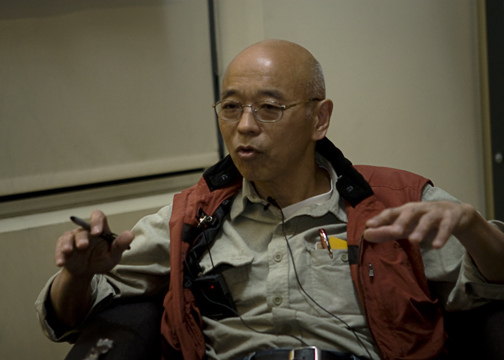
Here is a picture of my dear friend, teacher, and living bodhisattva, G. Victor Sogen Hori, professor emeritus of Zen Buddhism at McGill University. For him and for all the mercies and blessings he gave me, thanks and praise to the living God!


P.S. If you listen to the meditation–a special thanks to brother Jeremy Pletter, who bought me my drink at CTB, an Ithaca Ginger Beer-and who is teaching my daughter Annie to sing with power and joy.

Montreal Zen Poetry Festival 2009

Audio: We Shall Walk Through the Valley in Peace by Anabel Taylor Chapel Singers

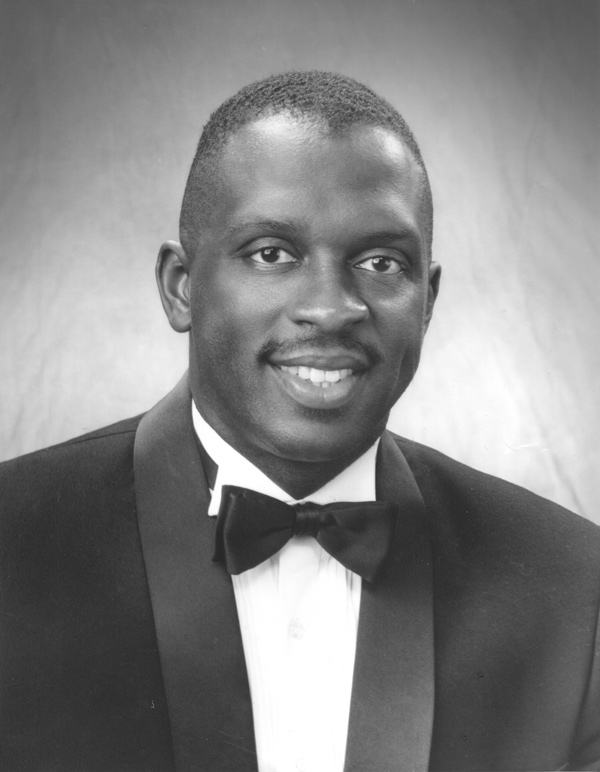
At  a recent celebration of the rich tradition of African American spirituals, our chaplain emeritus Gurdon Brewster heard the Dorothy Cotton Singers sing the incomparable Moses Hogan’s setting of We Shall Walk Through the Valley in Peace. It so moved him that he arranged to have it sung in his parish church, Epiphany Trumansburg, on Palm Sunday this Holy Week. Sadly Gurdon died before hearing his beloved community sing this wonderful piece of music, but we sang it with spirit and love, and then sang it again at his graveside service at Greensprings Cemetery.

This past Thursday night, the Anabel Taylor Chapel Choir, led by our director Ms. Anna O’Connell of the Cornell Roman Catholic community,  sang Hogan’s piece at their regularly scheduled Choral Compline service led by ECC chaplain Clark West. Here is an audio recording of their song, dedicated to the memory and legacy of Gurdon Brewster and the beloved community.

Moses_Hogan

Easter Sermon at Epiphany Trumansburg

After the sermon, we sang “What a Friend We Have in Jesus” which Gurdon writes about in the chapter “Singing Hymns” from his book No Turning BackAnd.yes, we sang the first verse again right after finishing the hymn because it is indeed that good.

daffodils by beebe lake